
FEATURED MYSTIC BOXER
LYNN ROGERS, M.A.
Featured Mystic Boxer:
Lynn Rogers interviewed by Daniel Yaryan
1. (DY): What were the earliest influences on your creativity?
(LR): The earliest influences on my creativity were opportunities my Bohemian (part Czech ancestry) mother offered me as a child: getting rid of coloring books and bringing rolls of butcher paper and paint, letting me run around in back yard mud and later, swirl expressively in community free form dance sessions. I didn’t have to be the constrained neat and tidy girl but could make messes and express myself. Later when I wrote poems in elementary school that the staff thought a child could not create, my mother went to bat and let them know they were not plagiarized, but my own. Subsequently as a verbally gifted child I was made the leads in school plays and led Christmas singing; out of schooI, I climbed trees and chain link fences, hanging upside down on the boy neighbor’s roof I could see into the cub scout meeting. In Jr. High, I ran for class president but was told girls could only be vice president. I had he grades to be valedictorian, but had to do it in a different guise as the director of girl’s athletics and arts said I was a girl.
When I rebelled as a teen, my more extreme poems came under her criticism, it was a two-edged sword. During that time as a youth in the peace and civil rights scene, exposure to Beat artists and poets further shaped my creative values. I read classics like Thomas Wolfe, later Erica Jong, was also exposed to living characters first hand such as Neal Cassady whom I had not yet read when fleeing conflicts at home—thrust “on the road” in Mexico one summer at 16.
2. (DY): You are an author artist, activist advocate —how closely associated are those roles in your life?
(LR): I am an author, artist, activist and advocate. These roles are closely associated as: I often write about or paint the marginalized and misunderstood therefore connecting advocacy and activism with writing and art.
3. (DY): How do you view the art world?
(LR): The art world in my south San Francisco Bay suburban and downtown communities, seems to be two-fold. Either favoring safe, pleasant decorator realism or, in some downtown circles, edgy art for art’s sake: expressive, daring, inclusive works by financially challenged, sometimes unstructured folks.
4. (DY): How does your outlook of the publishing industry differ from your view of the art world?
(LR): My outlook on the publishing world vs. the art world are not too dissimilar; one must be a good business person to succeed in the former or the latter, unless fortunate enough to spar with Beatnik ghosts like you, Daniel --recognizing post Beat contributors such as myself who are often, in your circles, artists as well.
5. (DY): What roadblocks have you been up against as an author?
(LR): I have been up against roadblocks when writing about sexuality and spirituality in the same breath—why not, though, we are complex beings and, in ancient Goddess times there wasn’t a division between the earthly and the Sacred.
Most of my work brings those without voice to the fore, often before it is popular to do so, thus I have taken flak for having positions that later become more popularized, as say, in my research and original application of women’s spirituality in writing and art. On the other hand, sometimes my efforts were appropriated by others who had at first opposed them. I was at the forefront the Bay Area hippie movements long before my disdainful high school classmates became weekend tourists to the Haight. Later at a reunion, those who had spit upon the few of us “hippies,” tried to take credit for the Summer of Love. And there was even an older person who’s kids my age had stayed safely at home but blocked my first works to be published while at the same time saying they were accurate.
6. (DY): How do you overcome barriers?
(LR): I overcome barriers by hanging in, enduring being misunderstood or devalued by persisting and learning how to frame my views and works in language that bridges. Mostly by following the inner impulse to create works of art and literature, no matter what, trusting that, in time, somehow, their day will come.
7. (DY): What subjects did you study in school?
(LR): In school I ultimately earned a BA from Antioch San Francisco in Transpersonal Psychology, the discipline that goes “trans”, or beyond the mask of “persona” or outer face we present to the world, to the deeper awareness of our spiritual connection to the All. At Antioch you often design courses thereby substantiating community work or studies you made earlier on your own.
Prior to this I immersed myself in their Creative Writing programs under the direction of Dr. Naomi Clark. She surprised students with a reading list of all female often prize-winning authors. When asked by a burly male fellow student in my earshot, “Why?” she answered to the effect that, we had been previously exposed, to all male authors. Earlier as a teen I had dropped in—and out—of UC Berkeley which was the pattern of the times, there I attended advanced standing English classes with Dr. Paul Pieler, took black and white dry media art I was making already in counterculture circles, to an instructor who first said Figures should remain within the boundaries of the paper, no heads extended beyond those for example, advise he soon amended. “Keep doing what you are doing,” typical of that unstructured but free, time.
8. (DY): Did your career goal change by the time you graduated from college?
(LR): Though my exposure was academic at times, I was more consistently writing poetic prose about my personal post Beat life encounters. That would carry me through later novels including two with an erratic womanizing field advisor, fictionalized to a pivotal rouge character. Though I took 900 hours under his unruly tutelage toward becoming an LMFCC counselor, I changed directions, became ordained in a liberal 100-year-old spiritualist church where I gave messages and spiritual counsel, advocating for those I need, taught community intuitive development and creative classes and kept writing and drawing on my own.
9. (DY): How would you describe your writing genre as a novelist?
(LR): I am proud to be post Beat which aptly describes early experiences about my university professor reader Anne Marie Maxwell had introduced me, deemed my work as around the “Beat/Hippie axis” a term he devised to describe my first novel. Amid other Beats and post Beats I feel at home and, at last, understood. I don’t have to hide the nude paintings or sensual content nor suppress the spiritual side. My informal and later academic training in following intuition fits with the spontaneous Beat prose and artistry.
10. (DY): Who are your favorite authors and artists?
(LR): My favorite authors and artists include lately those who write or record engaging memoir wherein they are faced with overwhelming challenges and draw on resilience to survive: From Shoa project accounts of the Holocaust, to the first recorded women climber teams hanging upside down from glaciers on the highest world peaks, to Dave Pelzer’s accounts of surviving maternal cruelty up the Peninsula from where I grew up in books like A Boy Named It; I am riveted and inspired. I love the local poetry chapbooks and fine art of Al Preciado and the free figures and the ink dripping of Ellzabeth Parashis. Of course, the literary rush through On the Road was helpful as an audio book, but my favorite from that era was Jerry Kamsta’s Frisco Kid, a later Beat masterpiece. As a kid I read North Beach classics like Ferlinghetti’s Her, told in stream of consciousness, no paragraph divisions. Later I met Women of the Beat Generation authors. I learned how often, such talented writers would be made to write in freezing cars as there could only be one (male) author in the family, how Allen Ginsberg’s look alike ill-fated love jumped from an upper story window to her death, gifted female writers were made to work full time at magazines to fund their male counterparts’ On the Road Sagas, did all their return laundry and gave succor and shelter. In those days boys got to be boys, supported by these talented gals.
Joyce Johnson’s Minor Characters and Carolyn Cassady’s Off the Road Beat memoirs chronicled Beat women’s expected contributions and exploitation. Raised to be more of a free spirit by my love child, creative and troubled mother and who supported father who gave hands on nurturing to his kids questioned more sexist elements of the scene.
I read all of Erica Jong’s bold autobiographical novels which integrated historic, literary and sensual woman centered events in novels that so closely paralleled her life—as had Thomas Wolfe’s Whitmanesque accounts—their fictionalized autobiography approach inspired later work.
11. (DY): What prompted you to write Born in Berkeley?
(LR): It was in that San Jose State University’s creative writing program that I first recorded of my experiences with Kesey’s clan in Mexico, originally as a short story that became the nucleus of Born in Berkeley. I simultaneously benefited greatly from creative community arts and courses taught by generous, encouraging adult ed teachers, particularly private mentor Louise Vernon who helped me outpour and organize the rest of that book.
12. (DY): Who are some of the major influences on you as a writer?
(LR): Major influences on myself as writer include early exposure to off Beat literature, ushering for community theater; taking a few acting classes there, more often listening in the dark to dialogue in plays like The Night of the Iguana; , writing for the high school literary journal (MA’s Oak Leaves), then attending experimental Pacific High on Skyline Boulevard with the likes of Bob Weir just before me, discussing poets like T.S. Eliot there. I later discovered first authors like Tillie Olson and Maxine Hong Kingston in Clark’s class at SJSU, though I’d been reading and reading in my teens, and before old hardbound dusty children’s classics my mother recovered from peninsula-bought thrift stores, particularly Louisa May Alcott’s Utopian, transcendentalist Little Women series.
13. (DY): What did you like best about the 60s?
(LR): In the 60s I liked the folk music, working for Civil Rights, even being made an MC for a Southern Negro voting rights event at 15. I felt part of something making posters at the Anti-Vietnam Day marches in Berkeley with older artist pal Ann Schiffman from Pacific High. I liked learning to draw from another older girl friend, Frances Joy Bradbury, who didn’t shave under her arms, could fix her Borgward car and who pulled in young male roommates in Palo Alto’s Lytton House, as nude models for us to draw. I liked it when an older very heavyset lady tenant downstairs from rooms where Neal Cassady crashed, ventured out of hiding to join us for body painting; everyone was welcome. I liked the non-materialism best, something we forget. We privileged suburban kids could stop being rated for lookalike Stanford Shopping Center clothes, could live simply like Franciscans, even beg on the streets of Mexico, make our own earth bread, warm ourselves around Big Sur campfires. I liked the Kesey people making up new names that mocked 50s convention, like “Doris Delay.” I liked painted recycled busses and off Beat creativity. It is that playful creativity I carry over to today.
14. (DY): What did you dislike about the 60s?
(LR): I didn’t like a lot about the 60s, I was always the youngest person in those scenes, tall and verbal, but impractical and awkward—a kid. Much was scary. With allergies I didn’t know about in the family the drug scene soon revealed it was not my path. I didn’t like trying warding off the aggressive advances of adult men when I was a teen something normalized now by later accounts of Neal’s Luanne, giving little heed to her being a child. I didn’t like that sexual freedom was not that of women choosing what they liked to explore themselves, rather having to say yes to be cool and have a boyfriend, while before having to say no to keep one. Freedom would be women choosing more and being accepted with diverse and unique looks. Mainly, if I had been older then, it would have been better.
15. (DY): Is Born in Berkeley part of a series? If so, tell me a bit about the other books in the series.
(LR): The rest of the books in my Born in Berkeley series all came to me in a rush of impassioned spontaneous writing in cycles. They take the fictionalized, often but not always, autobiographical character, Caroline Ryder, through decades of evolution and adventure. It’s Born in Berkeley in the 60s; The Rainbow’s Daughter in the 70s; Where the Flowers Have Gone and Shadow Over the Beach in the 80s; Revenge of the Goddess and Parting the Veil in the 90s; A Burst of Sunrise, Side Roads, (Roll Away the Stone) and Swan Again before and after the millennium. The entirely fictional mystery, A Valley of Ashes, takes place in this time too, synthesizing previous themes of post Beat anti-materialism in Silicon Valley, older and younger love stories, spirituality and a poetic stream of consciousness, multiple viewpoint voices. The Last Piano bar culminates the BIB series, set in the ought teens.
16. (DY): You have a Master’s degree —please explain how that course of study has impacted your writing.
(LR): I went back and earned a Master’s Degree through studies at John F. Kennedy in the Bay Area, completing it by living for semesters at a time at Atlantic University, connected to the Edgar Cayce Headquarters in Virginia Beach. Holistic classes there in Psychology, Philosophy and Religion made more academic, my informal studies with early by Cayce exponent Jessica Madigan. Between semesters I studied Medieval Mystics with revolutionary theologian Matthew Fox at his creation spirituality program in Oakland. I loved learning about artist, author and advocate, 12th century Hildegard of Bingen who preceded Michelangelo and Da Vinci. With Fox I co-hosted a San Jose State University benefit for Autistic youth needing group homes through Spark Foundation and was featured with Fox in the news. I organized and participated in my first benefit art show there to assist that effort. Over time I came to spark more literary and artistic events when teaching that included educator and community catalyst Al Preciado, who’s expressive, explosive art and poems inspired me greatly.
17. (DY): What do you like best as a teacher? Talk to me about the classes you teach.
(LR): For 28 years now, I have taught an intuitive method of Creative Writing for inclusive adult education and community programs, benefiting greatly from interaction with students. Many mature students have written their first books, won essay contests, created family and community legacy. Yes, I have taught working adults in night school, dabbled at high school summer students, been a college guest lecturer for psychology classes on my Born in Berkeley experiences. But far and away I prefer teaching classes that include bright active older adults. They bring me full circle to a very early creative life influence.
Before I was five, we lived in Berkeley with my vaudeville composer and singer grandfather who had worked his way out of Dickens’ London as a singing waiter on a Cunard line just before the Titanic. He crossed this country through pristine national parks, bringing a team of entertaining wait staff “on the road” to land in California where he was also made golf pro. He and other much older grandparents like his counterpart, a Rosicrucian on my mother’s side; those and lovely “maiden” aunts made my early childhood happy, so now I enjoy teaching times with older folks. From Berkeley we moved to Menlo Park where my father would ultimately become director of the United States Geological Survey’s Western Region from Colorado to Alaska.
Over time in the South Bay, I have also taught meditation, women’s spirituality, intuitive development and various other writing and illustrating classes. In recent years, it surprises me to discover how close a virtual group can become. During the height of the pandemic, I would, after class, go wash my hands as if we had been in the same room. During that time too, I had the opportunity to study art theory and painting with my artist friend from Berkeley days, who had researched art principles missing in our youth. Those virtual classes were a gift.
18. (DY): Is there a creative outlet that you wish to explore—one that you haven’t explored yet?
(LR): Now…I would like to bring a plethora of creative work together. As a person who may splash out four paintings spread over the floor at a time, and who has a blizzard of notes, poems, and still unpublished work in her crowded cottage, a new feat might be to organize, publish and preserve this creativity. Creating a legacy matters and I have often saved the work of older authors without family. If anonymous was a woman that is not for me. My spiritual mentor Jessica Madigan once gave me a brief Akashic reading in the fashion of Edgar Cayce: “Write that, which has not been written.”
19. (DY): Do you have any heroes or people you look up to?
(LR): My heroes and heroines are those who turned stumbling blocks, into steppingstones, and who braved great challenges to develop compassion for those with a voice. Eleanor Roosevelt whose social programs helped my mother survive the Depression comes to mind. Mother Theresa and Brother Roger who took a dying infant girl from the street; he held her for six months; the baby became a physician. Helen Keller and her half blind teacher, Annie Sullivan who survived the loss of her little brother in a rat-infested institution and became the penultimate teacher for Keller. My own teacher Jessica Madigan who was orphaned at birth, suffered great losses but left a creative legacy of hopeful books, plays and readings. Here I must credit my late husband, older Joseph Haddox, loving stepfather to my two special children, one gifted, with special needs. Alone from a toddler until nightfall in boarding houses when his working mother raised during the Depression, he became a compassionate dad to children regardless of biology. Taking apart radios and such later as a kid there, he went on to become an unsung computer pioneer. Of course, John Lewis of SNCC Civil rights days is also among my heroes. Also, Matthew Fox who resurrected multitalented medieval nuns from obscurity. He was finally pushed out of the church by the office of Inquisition but speaks out from Grace Cathedral, espousing justice worldwide in the context of his Four Paths of Creation Spirituality: Via Positiva, the joyful times; Via Negativa or the dark night of the soul, adding Via Creativa and Via Transformativa whereby artist artists and poets especially, may turn challenges into enduring works that transform communities.
20. (DY): How have your surroundings inspired you?
(LR): My surroundings inspire me, including an old tree I saved recently from developers curling here from just over the fence. Sitting beneath its ancient canopy in a ramshackle, art adorned yard, drawing in whiffs of oak scented breeze; laughing with an outside boy and an inside girl both ginger, reincarnated cat friends, with whom I welcome creative visitors from time to time, is soothing. Although I have crossed this country by train on post Beat book sagas along Beat America’s byways, these cozy surroundings, bring it all back home.
POEMS BY LYNN ROGERS
LYNN ROGERS
ODE TO TOM
Sliding off the edge of tomorrow
Riding to where you are
On the Other Side of life
Saying neither hello nor good goodbye
Only
I am here
In the intersperses
I hear you in the
Hollow night
I love you in the
Moving sea of Time
I remember in the times that were:
You driving up the highway
To your old abandoned office
Half asleep to a secret entrance through which
You would
Let me in too
With your old GE Nuclear
Door card and I would wander that wing and write
And sleep all day while
You worked up front
Until you would burst open
Crisp white business shirt
Old fashioned men’s tassel loafers
Pleated pants clad and we might
Make love suspended over a desk
Or you might read the Great Gatsby
Your own past life tome to me
From start over days
To finish and I was happier there
Than anyone had a right to
To be
Now you are a ghost
And I am your Mrs. Muir
And I am still happier
Than anyone could be
Rattling around what is left of this life
Knowing that you enter it
Quietly somehow
At will when I least expect it
In the creaks of the walls
In the dark early am
On anywhere on the fly
When I sing
Or teach of get silly
Disheartened from too much alone;
That you are unfolding still
Through me
Beyond time
Where we still lie coiled
Unshakably
Together.
LYNN ROGERS
At Your Place
1
Lit by a blue inner light
Lying above me
Like an erotic Christ
On a cross
(You’ve suffered surgery)
With my hands on your feet
Inaudible traffic sounds
The day’s heat, cold, flee
Between us; diffuse
Auric showers flow
I can know you
For a moment, you—me
This rare communion
Inspired by your eyes
In need of healing
As were (St.) Francis’
By Clare; what went on there
In that secluded monastic
Cell is imprinted
On wind, centuries
Later there are some
Tender exchanges
Indelible, ephemeral
About which few words
May be spoken
2
And yet keeping
At best a certain
Arm’s length I am
Drawn like a faun
To the loamy
30s style carpeted floor
Of your bachelor’s,
Gender fluid
Pad, so near
Old Palo Alto
Scene of my own
Youthful fleeing
From Menlo Park’s
Wealthy accoutrements
I am here
Now with you
Gracious (convalescing) host
Swirling down Dantean rings
Holding fast to the
Posture of healer
My hands pressure
Your post-operative
Pressure 0oints while I slip
Despite myself
Into a Dionysian whirl
With its images of your past
Dancing by for me to
Understand, accept,
Lying like this I glimpse
Your charming, convoluted
Childhood manse;
Where, perhaps hiding
From an inebriated father
In your mother’s closet
Your wrap up in her mink.
Then I imagine you alone
In your expansive
Third floor bedroom
Over the gardens
Enacting boyish literary
Characters then
And then decades later
As a sandy haired dad
With kids taken over
From a bright troubled wife
You write From Here to
Insanity for stand up
In San Francisco;
From Kelly Boy to H. P.
You ascend
While your private life
Rings with vaulting,
Vintage music
And vital, if confused
Imaginings, everything
From a drunken night
In that city’s shadows
Coming up from beneath
A randy rake;
To here, at last, with me.
3
Cactus Jumble
Clean, erudite
Your mature balcony
Garden plants above
A deceptively dangerous
Though pleasant street
Inside on a table
With interlocking rings
A red book on
Great songwriters
Long gone, beckons.
On your daybed
Amid a proliferation of
Comfortably worn
Pillows you are a
Cactus I am a shorn
Acacia from street side
Whose blossoms waft
Into your evocative abode.
4
Song Fragments
I thought I heard
At music tonight:
Try a little tenderness…
The room was dark
And the moon was yellow…
Where my Rosemary grows…
Nobody knows
Like me.
...
ORDER NOVELS BY LYNN ROGERS
Order The Rainbow's Daughter todey!
Click HERE to ORDER on SHOPIFY
Order Born in Berkeley todey!
Click HERE to ORDER on SHOPIFY
OTHER BOOKS BY
AUTHOR LYNN ROGERS:
- Born in Berkeley
- The Rainbow's Daughter
- Where the Flowers Have Gone
- Shadow Over the Beach
- Revenge of the Goddess
- Parting the Veil
- A Burst of Sunrise (includes Stories from the Other Woman, unpublished)
- Side Roads
- Swan Again
- Roll Away the Stone (unpublished)
- A Valley of Ashes (fictional mystery parallel synthesizes BIB and post Beat themes)
- The Last Piano Bar
- Edgar Cayce and the Eternal Feminine
- Alviso, San Jose (co-author)
- The works & memorabilia of Jessica Madigan (& associates)
- The Bridge of Brinnon
- Guided Autobiography
FOR MORE INFO ABOUT LYNN ROGERS AND SAMPLES OF HER ARTWORK:
https://sparringartists.com/lynn-rogers-1

Featured Mystic Boxer
MARC OLMSTED
(Photo of Marc Olmsted by Christopher Felver.)
INTRO TO MARC OLMSTED:
Allen Ginsberg said "MARC OLMSTED inherited Burroughs' scientific nerve & Kerouac's movie-minded line nailed down with gold eyebeam in San Francisco." (New Directions in Prose & Poetry #37). Olmsted appeared in that same volume, as well as in City Lights Journal, Outlaw Bible of American Poetry and a large variety of small presses. He has four books of poetry, Milky Desire (Subterranean Press 1991), Resume (Inevitable Press, 1998), What Use Am I A Hungry Ghost? which has an introduction by Allen Ginsberg (Valley Contemporary Press 2001), and Fresh Lotus Rehab (Virgogray Press, 2009). Twice nominated for a Pushcart Prize, Olmsted received the San Francisco Acker Award for Poetry in 2014 along with David Meltzer and Ishmael Reed.
MYSTIC BOXER FEATURE:
MARC OLMSTED INTERVIEWED BY DANIEL YARYAN
1) DY: Tell me a bit about your origin story — where were you born? What did your parents do for a living?
MO: I was born in Rockville Centre, Long Island, which was the main hospital for Manhasset, where I grew up the first 5 years. My father worked in live television in NYC as a character actor, but the business was drying up on the East Coast. I didn’t realize it, but he had tremendous success in radio with STORIES BY OLMSTED, and recorded some ghost and horror stories with Vanguard, most importantly Edgar Allan Poe. But I was born into his decline in show biz and we moved to L.A. in 1960, where unfortunately, his decline continued, though he always worked.
2) DY: What were some interests of yours as a young person?
MO: Dinosaurs! Comic books!
3) DY: What was your impression of the world around you growing up?
MO: It seemed pretty safe and insulated. We were upper-middle class in the 50’s.
4) DY: What were your early creative experiences?
MO: I got the usual kid praise for crayon pictures, but my dad suggested I start writing the further adventures of Sir Arthur Conan Doyle’s LOST WORLD, since I wanted more. I got the bug.
5) DY: What media formats made an indelible impression on you growing up?
MO: Movies!
6) DY: Who were your early heroes?
MO: Ray Bradbury, Forrest J. Ackerman (the editor of FAMOUS MONSTERS magazine), and Ray Harryhausen the stop-motion animator of films like 7TH VOYAGE OF SINBAD. Ironically, they were all high school friends.
7) DY: Which Beat writer or Poet did you discover first and inspire you the most? Where were you when this discovery took place?
MO: Richard Modiano introduced me to Allen Ginsberg’s work when I was 13. I had already seen imitations of Allen’s style in the poetry of my older brother Ross’s “beatnik” friend. I loved that use of surreal metaphor, so visual! It seemed an extension of Ray Bradbury’s style, who I was totally into, due to my dad’s reading him to me.
8) DY: There’s an old saying, “never meet your heroes.” Does that statement ring true from your experience?
MO: I’ve always found that an ironic statement, because when I met Bradbury, Ginsberg or Burroughs, they were exactly who I thought they’d be.
9) DY: What was a difficult hurdle or a challenging turning point in your life?
MO: Getting clean and sober, I think I was 31.
10) DY: How did you overcome that challenge?
MO: Twelve step program.
11) DY: In your teens and early 20s, were you a rebellious youth?
MO: Marijuana and acid have that effect.
12) DY: How did you transform into a poet?
MO: I took a creative writing summer class when I was 12, and adults responded well to my attempts at poetry, so I stuck with it.
13) DY: You had a regular correspondence with Allen Ginsberg. How was that correspondence initiated?
MO: I wrote him in 1972 and he wrote back.
14) DY: Can you tell me the scope of your most recent book of letters with Ginsberg?
MO: Once I met him at that Chogyam Trungpa lecture I mentioned earlier, we “hit it off” and became lovers, though not exclusively, of course. That lasted six years and the letters reflect that, but also involved a lot of commentary about my poetry and Buddhism in general. After I broke off the romance, we still wrote and I still regularly saw him or heard from him right up to his death.
15) DY: Did you attend the Jack Kerouac conference in Boulder, Colorado in 1982? If so, what was something new that you learned about Kerouac or the path which he forged?
MO: I didn’t. I’d visited Naropa in 1978 and felt I got what that experience offered. I was in a working band, The Job, which was my obsession, and I suppose if anyone was ambitious enough, we would have taken the band out there to play - but of course we didn’t even have a van and we knew we’d make nothing, let alone have a place to stay that was tolerable.
16) DY: Do you have a favorite literary event that you attended?
MO: Attending a Burroughs conference in Paris 2023. It was a lost tribe of Burroughs nerds finding each other.
17) DY: Where did your interest in punk rock come from?
MO: I was aware of it before I liked it. Allen Ginsberg alerted me to its significance and pointed out to me in North Beach V. Vale of “Search and Destroy” zine, which Allen had helped finance. It wasn’t until Devo and the Sex Pistols came on the radio that I got it. Chris D. of the Flesh Eaters was a poet friend and played me Iggy and the Stooges, which I did not get at all, but later Iggy’s solo album with Bowie, THE IDIOT, completely hooked me and opened up the older material for me.
18) DY: Tell me about your punk band The Job — how did that evolve?
MO: Well, at that time anyone was allowed to start a band, which was a great thrill, because singing well or playing well were not required.
19) DY: When did you star in Michael McClure’s The Beard?
MO: I think that was 1978.
20) DY: Where did you perform that play?
MO: At lunch hour, San Francisco State.
21) DY: Were you in one of the productions that was shut down by the cops?
MO: Naw. The play really isn’t that scandalous anymore or even in 1978. McClure threatened us through his agent, because we hadn’t paid him anything and the play was trimmed to fit in an hour.
22) DY: Was The Beard your first play?
MO: No, I’d done some acting, most significantly when I was 13 in high school where I met Richard Modiano, who played Judge Gaffney. I was Dr. Chumley, the head of the insane asylum in HARVEY.
23) DY: You’ve made some films…What were these films and what prompted you to make them?
MO: I “loved movies and wanted to be a part of them,” as Richard Modiano once explained why we were doing it as we labored over a treatment of ON THE ROAD, a request-suggestion of a particular agent. A lot of work for a long shot that didn’t pan out, of course.. Such is the business. I had already played around with a Super 8 camera (You can see THE BIG FIX on YouTube) and I thought maybe I can make a living. Wrong. SF State introduced me to experimental film and that really excited me. So BURROUGHS ON BOWERY and AMERICAN MUTANT came out of that. Which essentially doomed me as a filmmaker making a living.
24) DY: You’re a Buddhist. When did that journey begin?
MO: The major shift came from seeing Chögyam Trungpa Rinpoche in 1974. I was basically Hindu before that, in a McDonald’s fast food sort of way.
25) DY: What impact has Buddhism made on your writing and poetry?
MO: I think William Carlos Williams and haiku both contain the element I consider Buddhist. Appreciation without grasping of snapshot moments.
26) DY: What role does poetry play in your current world view?
MO: Poetry is a daily celebration for me, by which I mean a celebration of the wide range of human experience - I think most of my poetry is not very happy, but the act is uplifting. It’s almost as essential as meditation for me.
27) DY: To what extent can poetry shape the future?
MO: I wish I knew. Richard Modiano is a revolutionary. I don’t have that hope. I suppose if my work survives, it might be a record of sobriety and Buddhist practice. That could have influence.
28) DY: What is your next project?
MO: Probably just getting my archives in order. I turn 72 this year. That really gets you thinking about death as everyone starts dying around you. I have a book coming out on Beatdom, BEAT DHARMA, which tries to be some sort of resource. There is a tremendous amount of confusion out there about the Beats and Buddhism, and then I see that confusion used in other books, and that’s very disheartening.
29) DY: Do you have a favorite poem of all time?
MO: I confess it would have to be “Howl.”
30) DY: Who are your favorite poets still with us today?
MO: Probably Anne Waldman is the only one left. I like Gary Snyder of course.
DY: That concludes the interview. Here is a sample of one of Olmsted's poems...
Marc Olmsted
MONDAY NIGHT
On the evening Portland light rail home
from the airport
when the doors open a man gets off the floor from his nap
& back to the seat opposite his explosive vomit
later he retires again to the floor
& when a midnight wheelchair tries to come on
she pauses at the sight & says “O hell, no!”
I look up from my conversation
with the homeless crone
as the car of addicts bursts into laughter
...
POEMS BY MARC OLMSTED
Marc Olmsted
ALLEN’S GRAVE
Visiting Ginsberg’s grave it began to rain
a refreshing drizzle that was walkable
until we made the truck below
by the Great Stupa
- now in my tent I think of Allen’s grave
(which has some ashes
more in Newark, New Jersey near his family)
- a new friend had asked
“Do you want to be alone with him?”
“He’s not there,” I said, but happy none the less
Drala Mountain Center
7/6/23
...
Marc Olmsted
REMEMBER, NEELI?
Corso saying he's walked in
on you & Bob S. making it -
"and they had such tiny dicks."
everyone laughing
"That's not true, Gregory, I've got 7 inches"
Gregory grinning evilly toothless jester -
and wasn't it your tiny North Beach place w/ Ginsey,
Bob Kaufman saying "Bring out the herowine"
eyes burning gleeful (maybe serious)
later a bigger place a party for Buk
you introduced me
Buk drunken like he knew me
- maybe that 1972 college reading I thought -
"Hank, this is Marc"
Buk's face now sullen
"I thought you were a woman."
...
MARC OLMSTED'S
BIBLIOGRAPHY
POETRY AND PROSE
- Milky Desire, Subterranean Press, 1991
- Resume’, Inevitable Press, 1999
- What Use Am I a Hungry Ghost?, Inevitable Press, 2000
- Fresh Lotus Rehab, Virgogray Press, 2009
- Don’t Hesitate: Knowing Allen Ginsberg, Beatdom Books, 2014
- Shark Tank Soup, CWP Collective Press, 2018
- Cemetery Manners, Four Feathers Press 2022
FILMS (ALL ON YOUTUBE)
- The Big Fix, 1974
- Burroughs on Bowery, 1978
- American Mutant, completed 2009
- The Count (video), 2011
- Remembering Neal Cassady w/ Bob Branaman (video), 2013
HIGH PRAISE FOR OLMSTED'S POETRY:
"Olmsted's sinuous poetry moves on the page. and in the eye and mind, like thoughts at the instant they become muscular movements. Sometimes there is winsome observation of old feelings making new punk imagery. Sometimes there is emptiness and the real ordinariness of a shining Buddhist world. It's vivid!"
--Michael McClure
"Again and again Marc Olmsted's poetry presents us with co-emergence: the simultaneity of the dark and light in our minds, in our lives. This book is a fierce and honest portrayal of the struggle toward realization: 'better prayers/ in other bodies.'"
--Diane di Prima
"...one of the few practitioners post-Kerouac who picked up on the loose and lucid form that Kerouac had developed."
--Allen Ginsberg
...
MORE INFORMATION
To learn about enrolling in one of Marc Olmsted's online classes or for a FREE chapbook, visit:
E-mail:
---

REVIEW COLUMN: "sparchive poetry collector"
CHARLES PLYMELL’S OVER THE STAGE OF KANSAS
REVIEWED BY DANIEL YARYAN
Charles Plymell’s latest book Over the Stage of Kansas (New & Selected Poems1966-2023) is a surrealist joyride of contemplation, exciting encounters and first-hand accounts of a lifetime of adventure outside the mainstream. Plymell and his artist comrades together were a mid-century wild bunch of creative pioneers, hailing from the bullseye of America. Plymell, along with his friends and kindred, artistic spirits of the same region of Kansas were from a group known in counter-culture legacy as the “Wichita Vortex.” Charley, as he’s known by his close friends and collaborators, sprang from his stomping ground of Kansas with other quintessential Beat-era Wichitans: artists Robert Branaman, Bruce Conner and poet Alan Russo, among others (including famed Beat poet Michael McClure and actor/filmmaker Dennis Hopper). It was a staging ground and springboard for youthful rebellion, unconventional mores, as well as an over-burst of artistic expression. Charley and company were compelled to bee-line their way from the rural, rustic plains of Kansas to the well-springs of bohemianism in California and New York, where they could add to a blooming cultural revolution in the making.
In Plymell’s poem “In Kansas” he expresses strong feelings about the Kansas he left in the dust, summarized in the poem stanza as follows:
But in Kansas you may have
the madman’s dream,
white whale on the desolate plains.
Or wild strawberries
of a baby’s dream
crushed beyond repair
There’s a chronology of when his poems were written included in Over the Stage of Kansas, although all the places and times described in the poems defy that chronology, hopping around consistently. Which is suitable because this big 370-page volume stems from many previously published books and chapbooks dating back to 1966 – a hefty sum of them referenced in the table of contents – selected and played in jukebox fashion as you read onward. This is the best Plymell poetry book to purchase and read right now because it gathers the essence of all of those older editions that are now worth some moolah as rare books, hard-to-find chapbooks and out-of-print collections from the Beat-Hippie axis. In other words, this book is an affordable gateway drug to the highs of Plymell poetry. Andy Warhol superstar and collaborator Gerard Malanga edited and wrote the foreword to Over the Stage of Kansas. In his foreword, Malanga states that he finds it inconceivable that Plymell is not a famous poet. “It’s a wonder he hasn’t received the recognition and respect that came easy to others of his generation,” said Malanga. “The fact is, Charley’s work represents some of the best poetry being written in America at this or any other time. It just is. Real and honest.”
I also agree with Malanga that one of the best poems in Stage is “In Memory of My Father.” In it, you get a beautiful glimpse of where Plymell came from:
To you who sung the riddles of that desolate Atlantis
While wind-worn wagons swept a sunken trail into eternal dust.
To your sod, your grass, your easy hills of flint from glacial
slope to wanderlust. “Perfect cattle country . . . the best I’ve
seen since Uruguay.” I’d oft heard you say, your dreams and maps
unfolded beneath those eyes that invented skies, could you
have known the winter owl’s alarm where black beasts of angus grazed?
I could not see as far, but went my way, you understood, and
Watched the windmills tell their listless joy to silt and seam.
Life must be beautiful or all is lost . . . those bison of the clouds
were pushed from life . . . slaughtered for sport . . . now they are the
stern clouds watching us from eternity and far beyond.
At 89 years old, Plymell is a poet I’d describe as one of the last “road going,” traveling, sojourning Beats. This is reflected in his writing throughout this book, such as with “Apocalypse Rose” with imagery such as this…
The hand that strikes the match at night
soon may grasp the torch of liberty.
While a dog tail dipped into a wound
holds the mirror union of the senses
Here’s another striking, insightful stanza from the same poem, written by Plymell, who you can tell spent a great deal of time with and was influenced by Allen Ginsberg (note: Plymell was the first one to turn Ginsberg on to Bob Dylan’s music):
Do those who cannot see, love darkness?
Does nightingale trade its song for fame?
Are you in human form, calm once more
With your imploding love to blame?
“Apocalypse Rose” is a brilliant poem that harkened the sympathy for fellow humankind that the Beats embodied, including the plight of people trying to survive on the streets. In one segment of the poem, Plymell ponders the existence of the cruelty and callousness toward the downtrodden, describing a wino dying in a stack of cardboard, then having other winos stacking cardboard and sleeping on top of his long-dead body, described as being “crushed like a rose in a Bible.”
There are several poems delving into the day-in-the-life grind of San Francisco streets. Another is this cool riff on “Apocalypse Rose” titled “Petal from the Rose,” here’s the whole petal:
Baby break that mind trap in time stigmata
through your outline has gone beyond the changes
of the mercury in your flaming youth!
Weary streets of waiting,
walking,
under the marquees of all night movies
on the meat block
where teen-age hustlers cruise.
Market St.
And the moon is full.
We see an old newsreel with the face of Dillinger.
“He smiles on the right side of his face,”
You say, “like Bogart.”
Voices in the fog
dispelled the blocks
of waves bright lights hung on.
In Over the Stage of Kansas, there are many phenomenal poems Plymell dedicated to many of his friends and cohorts, including Bob Branaman, actor Dean Stockwell, poet Jack Micheline, John Cassady (with a poem about Neal Cassady and Anne Marie Murphy – both of which were Plymell’s flat mates in San Francisco in the sixties).
Yet, the one dedication that I find to be the most powerful is his poem “From the Neo Surrealmic Manifesto (For S. Clay Wilson).” Plymell and Wilson were friends for many years, starting when he first published Wilson in Grist magazine from Lawrence, Kansas. It helped launch Wilson’s career, solidified with his inclusion of Zap magazine, not long after Plymell printed the premiere issue of Zap on his Multilith 1250 press in 1968. The underground comix movement was a shared passion of the two friends. After S. Clay Wilson became a famous counter-culture figure and famous artist, he always stayed in constant contact with Plymell – a friendship and correspondence superbly documented in the Water Row Books special artbook edition of Dear Charlie.
Here, is a fantastic stanza that sums up why it is among the top selections in Stage, especially among the dedicated poems:
Do you know something I don’t know, man?
Don’t let the bolts and liquid wrenches creep
upon you
or the punk ghosts will squeeze the
rat cowboy
out of his sleazy hormones
Probably the most spiritual, signature poem of Plymell’s is really the pyrotechnic, fascinating, big-finish offering of the epic “We Heard the Game Lord Speak, His Voice Became the Vision (Animals learn from Nature. Man must learn from Animals to understand nature’s reprisal).” This is undoubtedly bound to be the most talked about and is clearly the most visionary poem of Plymell’s in this collection. It is sensational; so here’s a little snippet from the 14-page poem to wet your appetite for something special that falls into a Robinson Jeffers and William Everson category of high-powered nature-as-conduit-holy-hero zone. This is an area of great interest to me, being a follower of Everson, who was a devout disciple of Jeffers. There is a uniqueness though in Plymell’s voice, being one that can morph between the boundaries of humanity’s terrain and the natural world. Here is a preview of the poem that conjures up the native images of Plymell’s Kansas vortex:
All suffered forever more man animal voice of space void
of hands and brains to conquer, attack, render
destruction in the name power taught in all curricula
to become aware of death in first written history
or discuss afterlife of the abstract gods
while elephants sensed their burial place.
Over the Stage of Kansas (New & Selected Poems1966-2023) is published by Bottle of Smoke Press and can be found on bospress.net or other booksellers online.
ABOUT THIS COLUMN:
ABOUT THE "SPARCHIVE":
The Kamstra Sparring Archive (AKA "SPARCHIVE" is a collection of art, literature, memorabilia and items of historical significance to creative movements past and present. It is the special collection of the Mystic Boxing Commission (MBC) and an interactive museum open to members of the MBC. This column is one of the features of the Sparchive.
PLYMELL BIO:
Charles Plymell (born April 26, 1935, in Holcomb, Kansas) is a poet, novelist, and small press publisher. Plymell has been published widely, collaborated with, and published many poets, writers, and artists, including principals of the Beat Generation.
He has published, printed, and designed many underground magazines and books with his wife Pamela Beach, a namesake in avant-garde publishing. He published former prisoner Ray Bremser and Herbert Huncke, whom he identified with from the hipster 1950s. He was influential in the underground comix scene, first printing Zap Comix artists such as Robert Crumb and S. Clay Wilson, whom he first published in Lawrence, Kansas.
Plymell received a citation for being a distinguished poet by Governor Joan of Kansas and was cited in the 1976 World Book Encyclopedia as a most promising poet.
CHARLES PLYMELL BOOKS:
- Apocalypse Rose,Auerhahn Press, 1967
- Neon Poems, Atom Mind Publications, 1970
- The Last of the Moccasins,City Lights Books,, 1971; Mother Road Publications, 1996
- The Trashing of America Phase 1, Tuvoti, 1973
- Over the Stage of Kansas, Telephone Books, 1973
- The Trashing of America, Kulchur Foundation, 1975
- Blue Orchid Numero Uno, Telephone Books, 1977
- Are you a Kid?,Cherry Valley Ediitions,, 1977
- Moccasins Ein Be*Cut Here, at-Kaleidoskop, Europaverlag, 1980
- Panik in Dodge City, Expanded Media Editions, 1983
- The Harder They Come, Am Here Books 1985
- Forever Wider, 1954–1984, Scarecrow Press, 1985
- Was Poe Afraid?, Bogg Publications, 1990.
- journals of Lysidia, Synesthesia Press, 1999
- Reefer Madness in the Age of Apostasy, Butcher Shop Press 2000.
- Hand on the Doorknob,Water Row Books, 2000
- in Memory of My Father, Cherry Valley Editions, 2003
- Cut Here, 12 Gauge Press, 2002
- Song for Neal Cassady, 12 Gauge Press, 2002
- Bennies From Heaven, 12 Gauge Press, 2002
- Rabid Ronnie Rap Back Jive Kansas, 1955, 12 Gauge Press, 2002
- Some Mothers' Sons, Cherry Valley Editions, 2004
- Neal and Anne on Gough Street, The Beat Scene Press, 2007
- News, Glass Eye Books, 2007
- Beginning Millenium: No More Vinyl Bush War, Glass Eye Books, 2008
- The Lost Poems of Charley Plymell, M Press, 2010
- Eat Not Thy Mind, Eye Books Ecstatic Peace Library, 2010
- Curricula Me Vita, Glass Eye Books/Ecstatic Peace/Cherry Valley Editions 2011
- Animal Light, Verlag Peter Engstler, 2012
- Tent Shaker Vortex Voice, Bottle of Smoke Press, 2012
- Benzedrine Highway, Kicks Books, 2013
- Planet Chernobyl, Verlag Peter Engstler, 2015
- Apocalypse Rose, Lenka Lente, 2015
- Incognito, Ergo Sum, Ragged Lion Press 2016
DISCOGRAPHY:
- Rod McKuen Reads in Memory of My Father, Cherry Valley Editions, Vinyl, 1978.
- Man Overboard, Charles Plymell (Voice),The Clubber Lang Gang, CD, 2012.
- Blackbird by Andrea Schroeder, "Bebop Blues", Glitterhouse Records, Berlin, 2012
- Where The Wild Oceans End by Andrea Schroeder, "The Rattlesnake", Glitterhouse Records, Berlin, 2014
- Tamatebako by CUZ, "Sand and Bones", bleeding heart recordings, UK, 2014.
- Cuz, Mike Watt & Sam Dook, Bad Veronica, Charles Plymell (Voice), UK, 2015.
- Animal Light, Charles Plymell (Voice), Verlag Peter Engsler , CD, 2015
- Planet Chernobyl, Charles Plymell (Voice), Verlag Peter Engstler, Germany, CD, 2015
- Void by Andrea Schroeder, "Was Poe Afraid?" Glitterhouse Records, Berlin, 2016
- Apocalypse Rose, poem bilingual text; music CD by Bill Nace, Lenka Lentes, Nantes, France, 2016.
- Bloodshot Bill Sings Charles Plymell, Feeding Tube Records, and Bottle of Smoke Press, 2017.
- Apocalypse Rose, Charles Plymell (Voice), Bill Nace (music), openmouthrecords,2017

REVIEW COLUMN: ICONS & IDEAS OF THE BEAT AXIS
MICHAEL C FORD'S "IN CASE OF FLOOD..."
REVIEWED BY LYNN ROGERS, M.A.
Dipping into the Illuminated Edition of Michael C. Ford’s work IN CASE OF FLOOD STAND ON THIS BOOK…IT’S DRY ENGLISH is like following a river of spilled wine, in and out of creative outpourings from this multitalented Beat poet, critic, jazz commentator, artist who now becomes a Legend.
In addition, this is the most beautiful book designed to date by its publisher, Daniel Yaryan, and he has shaped many.
From nostalgia anchored in ‘50s Southern California, with the requisite peripatetic wanderings, to critical asides (sans misogyny by the way, yeah!) his poetic prose is spooled out over many a moody graphic collage. Yes, the euphonious Ford can turn a phrase, especially about his area’s claim to cultural cool; “Tidewater pouring into sand/ pool cup/brims over a Pacific coastal/afternoon.”
Thus, he evokes nearby Hermosa, Altadena, La Crescenta, Mohave, Rialto Radio Theater etc. “Homeless World War 2 veterans making a racket like inebriated mockingbirds boinked on bad bourbon under the sill of Sunday mornings in Monrovia.” Personifying “Pomona, Pomona you were child to this Los Angeles father whenever mother got sick,” he draws us into his fabled anti-land of noir and beyond into the heart of hip America, by rail or imagination.
His allusions to musicians from Davis, Pepper and Getz, to Morrison, to literature like that of Elliott and Joyce, reflect Beat perceptions. Michael C Ford says for example, that Joyce found “the idols of the commercial marketplace supremely unimportant”, whereas Ford admits to the contrary that “a few icons of the marketplace, mainly those related to film or music or anything automotive or creative cartooning…billboard advertising…packaging…” are inherently poetic. And that distinguishes Beat sensibilities from those purely literary or academic. Ford encourages other poets who create on the edge and so are deemed illiterate by the literary mainstream, not to take such snobbery to heart.
And Michael C Ford can, on occasion, incorporate the Feminine: “…we are erecting imaginative pedestals of insane worship of certain women…” …”wind out of the West Indies able to say its name with no sexist accusations/or feminist injunctions…” “If you were my wife I’d ride prairie schooners to the shores of your flowery Kansas mouth..”
He experiments with reverse Catholic “sacraments,” suggesting mixed feelings about their meanings: “Art farther out than Heaven,” complements Kerouac’s associating the term Beat with biblical Beatitudes: Anti-materialistic, they of course suggested a natural simplicity and spiritual surrender as with the lilies of the field.
Ford goes further to create poetry and a kind of beauty amid and from ugly damage done to the environment: “Note on the orange grove obsolescence along Route 66 between the San Gabriel gateway and the City of San Bernardino.”
“What’s writ down, here, is in defense of any Southern California’s neighborhood architectural blight.”
In a similar way he creates ambivalent poetic human profiles. Take “The Importance of a Tennis Racquet,” a key piece in this book: It has place, Mariposa (meaning butterfly) Drive; nostalgia, “the blue innocence of my childhood.”
It recalls the elegiac lyricism of the most well-known Beat poet, Allen Ginsberg. The reader can hear reverberations of familial Kaddish themes in Michael C Ford’s own description of his antihero uncle before he got “rousted for robbery and sentenced to death in an alcoholic ward at Utica…” On the other hand, remembers “when I was 7 making him recollect a memory of The Army Airforce bombing of Dresden and all that he’d/ Been trying to forget?”
Ford identified with this uncle he never really knew, but wanted to forget because of “the memory of a toppled Christmas tree - the star of Bethlehem broken on the/Family living room..and he’s puking into/Somebody’s ribbon-brocaded Radio Flyer wagon.”. Despite these insults, the author was imaginatively imprinted with his wayward uncle’s earlier image: “recalling a snapshot of you on Skokie Country Club court when you were 16 and When you held your racquet like a saber…”
In short Michael C. Ford’s poetic life reminiscences let us revel in the flow of literary and artistic insight over time, spilled out now into in this Illuminated, full color coffee table edition, designed by Beat commemorator, Daniel Yaryan, like fine vintage wine.
ABOUT THE REVIEWER:
LYNN ROGERS M.A. was inspired by Beat icons and ideas as a youth on the road with Cassady and Kesey. Recently she has been invited into Who’s Who of America as Author; Artist; Advocate. She has written 14 books beginning with Born in Berkeley, created prolific mixed media art pieces and advocated for the marginalized. She co-hosted Sparring with Beatnik Ghost in Northern California; served as contributor, staff artist and author for Daniel Yaryan who has encouraged and understood her work as no other/
ABOUT THE BOOK AUTHOR MICHAEL C FORD:
MICHAEL C FORD is an America poet, playwright, editor and recording artist who is influenced by poet Kenneth Patchen in terms of integrating spoken words with Jazz. Ford has published steadily for over 50 years and is credited with 40 volumes of both print product and recorded solo tracks and compilations. He has created collaborative recordings with members of “The Doors” including drummer John Densmore, pianist and keyboardist Ray Manzarek and guitarist Robby Krieger. Ford has also performed in poetry shows with Jim Morrison, Jack Hirschman and Michael McClure among others. His debut spoken word vinyl (on SST Records) Language Commandoearned a Grammy nomination in 1986. His book of selected poems, Emergency Exits, was honored by a 1998 Pulitzer Prize nomination.
MORE INFORMATION:
AVAILABLE NOW! Michael C Ford's new poetry volume IN CASE OF FLOOD STAND ON THIS BOOK IT'S DRY ENGLISH is an "Illuminated Edition" featuring full-color graphic intensifiers throughout to compliment Ford's incredible poems.
- Hardbound U.S. Letter 8.5x11
- Designed by Yaryan
- Full-color volume with art from 25 contributors!
*** CLICK HERE: ORDER on LULU***
*** ORDER NOW WITH PAYPAL***
>>>USE DYARYAN@GMAIL .COM
MORE PAYMENT OPTIONS ON THIS HOME PAGE (INCLUDING ZELLE & VENMO)...
OTHER MEDIA BY MICHAEL C FORD:
- Stuttering in the Starlight (1970)
- There’s a Beast in My Garden (1971)
- Sheet Music [chapbook-length poem] (1972)
- Lacerations in a Broomcloset [pamphlet of prose] (1973)
- Lawn Swing Poems (1975)
- Rounding Third (1976)
- West Point [chapbook-length poem] (1977)
- Sleepless Night in a Soundproof Motel (1978)
- Prologue to an Interview with Leonard Cohen [replicated prose broadside] (1979)
- Two American Plays (1980)
- Sloe Speed [chapbook-length poem] (1984)
- Prior Convictions (1985)
- Language Commando [spoken word vinyl disc (1986)
- Ladies Above Suspicion (1987)
- Motel Café [12-inch spoken word vinyl disc (1988)
- Twice [a sheath of broadsides] (1989)
- Fire Escapes [spoken word CD] (1994)
- Cottonwood Tract [chapbook-length poem] (1996)
- Emergency Exits [Selected Poems: 1970-1995] (1998 Pulitzer nomination on the 1st ballot)
- Nursery Rhyme Assassin (2000)
- To Kiss the Blood off Our Hands (2007)
- The Marilyn Monroe Concerto [pamphlet edition] (2007)
- The Demented Chauffeur [and Other Mysteries] (2009)
- The Las Vegas Quartet [4-part pamphlet edition] (2011)
- San Joaquin County Solutions [collaboration with North Central Valley photo-journalist Rose Albano Risso] (2011)
- Atonal Riffs to a Tone-deaf Border Guard (2012)
- Crosswalk Casserole (2013)
- Look Each Other in the Ears [recorded tracks released in both CD & vinyl formats] (2014)
- The Driftwood Crucifix [a chapbook length poem] (2015)
- Women under the Influence (2016)
- The War Chamber Ministry (2019)
- Manhattan Island Suite / Block Island Latitudes [2 chapbooks in a double header format (2020)
- Populated Wilderness (2022)
- Home Fires Burning (2023)

Featured Mystic Boxer
MARC KOCKINOS (IN MEMORIAM, 4/29/62 -- 2/2/24)
(Photo of Marc Kockinos by Robert Fischer, 2021.)
My mind contains many fond recollections of kindred comrade Marc Kockinos, who departed this world February 2, 2024 after a bout with cancer. Marc and I met when we were both participants of the San Francisco literary arts scene, coinciding with the early years of my multimedia poetry series Sparring With Beatnik Ghosts, which began August 23, 2008 in the city by the Bay. We first met earlier that year at the Beat Museum at the Beat Friar Brother Antoninus induction celebration and exhibit. We quickly became comrades and read at the same poetry venues throughout The City. On one occasion, after I featured at Gallery Café, Marc and I headed over to Hotel Utah’s weekly, long-standing Monday night open mic and performed our poetry to music with mutual poet friend and pianist extraordinaire Steve Arntson. At the end of the night, my car had been towed and I needed to get home to my kids in Santa Cruz. Marc, to the rescue, drove me all the way to Santa Cruz and I dealt with the car situation later.
Many-a-night when I was visiting San Francisco as I frequently did, Marc and I would grab pints at places in North Beach such as Vesuvio’s, Specs or Tosca; often times in the Mission District too after the popular 16th and Mission reading (during part of that time I lived in nearby Burlingame). We shared many brother-deep stories and had fantastic discussions about the many challenges of life, world situations and pondering the universe as thinking beings often do (and he was highly intelligent, yet never judgmental or ego-maniacal as many other creative people I’ve encountered over the years). He had empathy for people and always cared about and wanted to know in all sincerity how they were doing or how he could help if he could. Bottom line, he was a real “people-person,” never of the commonplace, superficial variety and never self-declared. This trait is perhaps what made him such a successful organizer and host of one of the largest poetry events in the United States, which was called “Poetic Brew” in San Diego which set attendance records in the hundreds monthly, prior to moving to Northern California’s Mill Valley. A SF suburb, Mill Valley is a short distance north of the Golden Gate Bridge – rich in the arts and majestic beauty, which includes Mount Tamalpais, one of Marc’s favorite hiking spots, maybe second only to Muir Woods.
Marc hosted Open Heart Poetry at Om Shan Tea in the Mission District and was a member of San Francisco’s Revolutionary Poet’s Brigade, which also included the late, great SF Poet Laureate Emeritus Jack Hirschman, among many other trailblazers.
Marc was an active member of the IATSE Local 16, San Francisco. Local 16 said “Kockinos was often seen on the Trade Show floor, in the Breakout rooms, and the Keynote sessions. He was known for his compassion, deep booming voice, and expertise in nearly every facet of event production. He handled audio mixers as well as projectors; and was always happy to mentor newer folks in all the different skills that modern video and audio techs need these days. He was also very active in the SF and San Diego literary circles, as a poet and spoken-word performer. As well, he was a photographer, just an all-around lover of the arts.” I recall how dedicated Marc was to his job. One time I was on my way to the Berkeley Poetry Festival in 2012 for a special presentation of Sparring With Beatnik Ghosts. I took the BART train from the Fremont station up to the BART stop by Berkeley City College where the event was held. As I disembarked the train, I got a call from Marc asking if I could take over for him as host of the festival (about an hour before it began). He was called into work for an emergency and regretfully couldn’t make the event. I hosted in his stead and performed a Sparring set. I was grateful and honored that Marc thought of me to take his place for the event. Really though, no one could compare. He was one of the best hosts I’d even seen, with a calm demeanor, respect (and patience) for performers. Also, he understood how to engage the audience with a seamless command of the microphone.
Marc Kockinos hosted and performed in many Sparring With Beatnik Ghosts events over the years in Santa Cruz, Berkeley and San Francisco. He was truly masterful at delivering unforgettable professional events. In Marc, I found the optimal representative, along with co-host Ginger Murray, to usher the famous Poetry Festival back to Santa Cruz on 2/12/12 at the historic Cocoanut Grove Grand Ballroom at the Beach Boardwalk. It took a year to plan and was one of the greatest projects I had ever produced. The festival showcased 40 of some of the finest poets and musicians for an all-day extravaganza. Marc was part of the magic of that day, whereas he helped resurrect a cultural phenomenon in Santa Cruz that had been absent from the town for 30 years.
Marc was a dear friend who’s resounding voice I can still hear every time I read his indelible poems. I encourage people to watch some videos of Marc performing his work at Sparring With Beatnik Ghosts and other fabulous shows on YouTube. I’ve also included some of his poems herewith in honor of Marc, which prove his words are just as everlasting with the same vitality and energy once captured through his live performances throughout countless spoken word stations. Rest in Peace, dear friend! May you have many great conversations in the ethereal night with fellow Greek poets Homer and Hesiod. May Calliope and the other muses forever be in your corner!
– Daniel Yaryan, MBC Publisher
...
POUND OF FLESH
by Marc Kockinos
If all the spoon-fed illusions
that you have followed since youth
of easy success and popularity..
shattered like glass at your feet.:
Would you pay..
Would you pay..
..to be Free?
If something pure called
from out of the darkness
like a distant lighthouse
leading you back to shore:
Would you pay..
Would you pay..
..to be Free?
Always chasing an idea
down a hundred blind alleys
and over and over
it dispels like fog
just as you touch:
Would you pay..
Would you pay..
..to be Free?
After you've spent another day..
After you've spent another month..
After you've spent another year..
wrestling with a desire
that you can not name:
(Pound of Flesh: 1 of 2 )
Would you pay..
Would you pay..
..to be free?
As you finally start
to understand what it is
that you've been searching for;
you pour your soul out
to all your friends,
but no one seems to know
exactly what you mean,
and no one seems
to really even care:
Would you pay..
Would you pay..
..to be Free?
When discontent smolders
from behind your lovers' eyes;
and all you have to exchange
for a guarantee of comfort,
is your most heart-felt dream:
Would you pay..
Would you pay..
..to be Free?
...
POEMS BY MARC KOCKINOS
INTERRUPTED JOURNEY
Spiraling shards of glass
capture the sun
for one glowing moment
before skipping across asphalt
like miniature mountain peaks
shrouded by the rippling haze
of late afternoon heat.
She had been dreaming
of a roadside diner;
easing tight muscles into
the overstuffed cushions
of a naugahyde booth.
Her hands raising
a tall glass of ice tea
to parched lips.
But now she turns slowly
on a bed of arid wind,
seeing / not seeing
the ball of flame
that was her car
rolling across
the freeway
below her.
At the apex of her flight
she lies perfectly still;
for one glowing moment
she reaches up for the summer clouds
that revolve just beyond her grasp.
Before she starts the long,
inevitable descent, to the ground.
...
OPEN MIC INVOCATION (Part 3)
We are gathered here tonight
To join together
In a Community
For a few brief hours
To express whatever
Poetry that we may choose
From chronicling
Our common experience
To taking a firm stand
On our first amendment
Rights to speak freely
About all the subjects
Censored by society
We may use some satire
To focus a spotlight
On all the foolishness
That pretends to be wise
Or if we feel like it:
We might bring that Beat back
To the San Francisco Bay
Not some retro fashion
Of beret wearing beatniks
Beating on bongos
And raccoon-mascara’d
Cool cat chicks just in it
For the kicks, man, kicks
But rather a poetry
Born at the point where
Working class experience
and the transcendental intersect
Voices blowing out a pure
Be bop note ecstatic
As the free verse of Whitman
Or laying down a backbeat
In the harsh lexicon
That rises from the street
So, whether you choose to perform
Hip Hop or Homeric Verse
Read at Slams or write Sonnets
Step on up to the Mic
And bring the Word into Flesh
In all it’s myriad forms
Step Up!
All you technicians of verse
With your well-crafted constructions
Step Up!
All you seeking solace
In a labyrinth of words
Step Up!
Any newcomers in our midst
And we will support that
First nerve-wracking read
In front of an Audience
Step up!
All you Revolutionaries
Fighting for a better day
Step up!
All you angry iconoclasts
Railing against all the
Injustices of life
Step up!
All you Survivors
Driven to bear witness
To the atrocities
Never viewed by History
Step Up!
All you wayward travelers
recreating far off lands
before the eyes of our mind
Step Up!
All you true romantics
Serenading the One
that sets your heart aflame
Step Up! All you Bards
Of human existence
Step Up! All you healers
Of the invisibly wounded
STEP UP!
All YOU WHO RAISE YOUR VOICE
AGAINST THE LONELINESS
OF THE AMERICAN NIGHT!
Reviews, Interviews & Articles
EMPTY MIRROR online magazine reviews the 45th Anniversary Edition of "WEED"

EMPTY MIRROR online literary magazine's Gregory Stephenson reviews the 45th Anniversary Edition of "WEED: ADVENTURES OF A DOPE SMUGGLER" by JERRY KAMSTRA. Click the button below to read the article...
WEEDWEEK podcast interview discussion on "WEED: Adventures of a Dope Smuggler"

WEEDWEEK hosts Donnell Alexander and Alex Halperin interview publisher Daniel Yaryan on "WEED: ADVENTURES OF A DOPE SMUGGLER" by JERRY KAMSTRA. Click button below to hear the podcast show and interview...
SANTA CRUZ SENTINEL article about JERRY KAMSTRA receiving lifetime achievement as "literary outlaw"
SANTA CRUZ SENTINEL article about JERRY KAMSTRA receiving lifetime achievement as "literary outlaw"
SANTA CRUZ SENTINEL article about JERRY KAMSTRA receiving lifetime achievement as "literary outlaw"
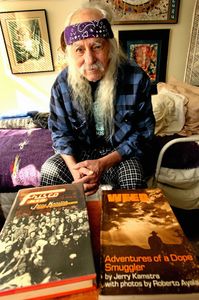
SANTA CRUZ SENTINEL writer Wallace Baine wrote a feature story about novelist JERRY KAMSTRA receiving lifetime achievement award for 'literary outlaw' life. (Photo by Dan Coyro/Sentinel) Click button below to read the Sentinel article...
SantaCruz.com article about LAWRENCE FERLINGHETTI DAY hosted/produced by YARYAN
SANTA CRUZ SENTINEL article about JERRY KAMSTRA receiving lifetime achievement as "literary outlaw"
SANTA CRUZ SENTINEL article about JERRY KAMSTRA receiving lifetime achievement as "literary outlaw"
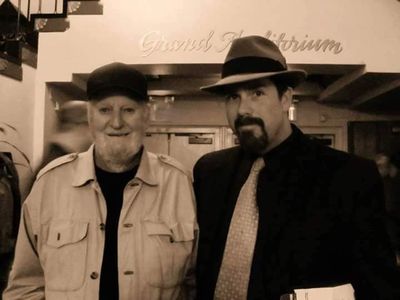
SANTA CRUZ WEEKLY writer Stephen Kessler wrote a feature story about LAWRENCE FERLINGHETTI DAY in Santa Cruz hosted and produced by YARYAN. (Photo by Christopher Felver) Click button below to read the Santa Cruz Weekly article...